Discover why Aircraft Maintenance Engineers (AMEs) are essential to aviation safety. Learn about their responsibilities, aircraft inspections, troubleshooting, certification and career opportunities in the aviation industry.
Why Aircraft Maintenance Engineers (AMEs) Are Essential for Aviation Safety
The aviation industry depends on more than pilots and air traffic controllers to ensure safe air travel. Behind every successful flight is a team of skilled aviation professionals responsible for keeping aircraft in safe and airworthy condition. Among these professionals, Aircraft Maintenance Engineers (AMEs) play a crucial role.
Aircraft Maintenance Engineers are trained to inspect, maintain, troubleshoot and certify aircraft systems in accordance with applicable aviation regulations and approved maintenance procedures. Their work helps ensure that aircraft meet the required safety and airworthiness standards before returning to service.
As the aviation industry continues to expand, the importance of qualified Aircraft Maintenance Engineers is becoming increasingly significant.
Why Are Aircraft Maintenance Engineers Needed?
Aircraft are complex machines consisting of thousands of mechanical, electrical, hydraulic and electronic components. Even a minor technical fault can affect aircraft performance and operational safety. AMEs help identify and address these issues through systematic inspection and maintenance.
1. Ensuring Passenger and Aircraft Safety
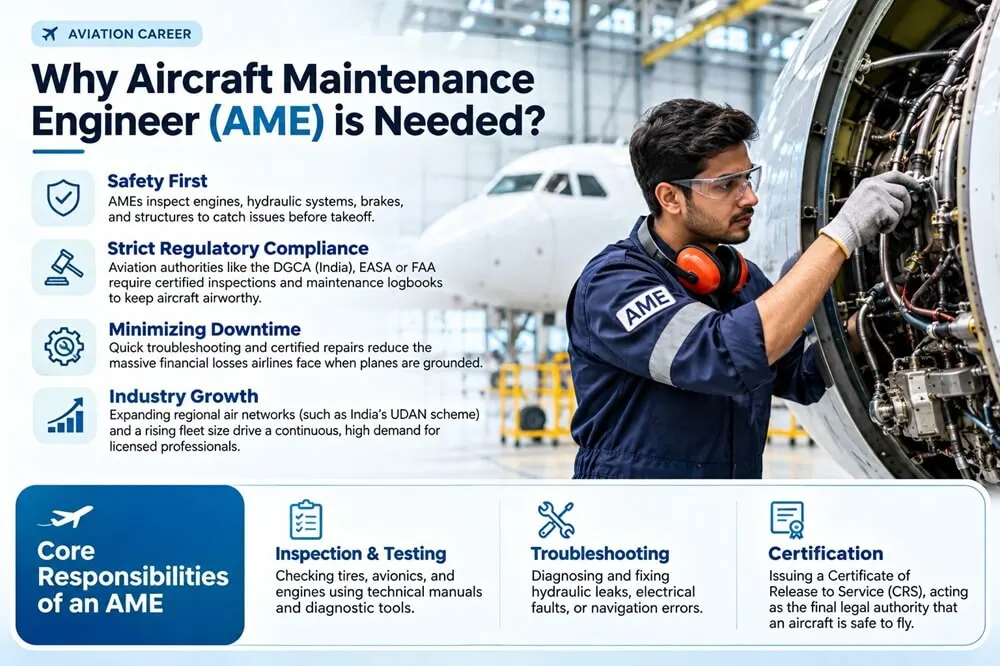
Safety is the highest priority in aviation. AMEs inspect critical aircraft components, including engines, landing gear, brakes, hydraulic systems and aircraft structures. These inspections help identify potential defects before they become serious problems.
2. Maintaining Regulatory Compliance
Aircraft maintenance must follow strict aviation regulations and approved procedures. Regulatory authorities such as the Directorate General of Civil Aviation (DGCA) in India, the European Union Aviation Safety Agency (EASA) and the Federal Aviation Administration (FAA) establish requirements for aircraft maintenance and airworthiness.
Qualified and appropriately authorised maintenance professionals perform inspections, maintain records and complete the required certification procedures.
3. Reducing Aircraft Downtime
Technical problems can keep aircraft grounded and disrupt airline operations. AMEs identify faults, perform troubleshooting and coordinate necessary maintenance activities.
Efficient maintenance helps airlines reduce unnecessary delays, improve aircraft availability and maintain operational efficiency.
4. Supporting the Growth of the Aviation Industry
The expansion of air travel, increasing aircraft fleets and regional connectivity initiatives such as India's UDAN scheme contribute to the demand for aviation professionals.
As aircraft operations grow, skilled maintenance personnel remain essential for supporting safe and reliable aviation operations.
Core Responsibilities of an Aircraft Maintenance Engineer
Aircraft Maintenance Engineers perform several important technical and safety-related responsibilities.
1. Aircraft Inspection and Testing
AMEs carry out scheduled and unscheduled inspections to evaluate the condition of aircraft components and systems. They examine engines, tyres, landing gear, avionics and other essential equipment using approved technical manuals and inspection procedures.
2. Troubleshooting and Fault Diagnosis
Aircraft systems can develop mechanical, electrical or electronic faults. AMEs use diagnostic equipment, technical documentation and systematic troubleshooting methods to identify the source of problems.
Examples include:
-
Identifying hydraulic system leaks.
-
Diagnosing electrical system faults.
-
Checking engine-related technical issues.
-
Investigating avionics and navigation system problems.
3. Aircraft Maintenance and Repairs
AMEs participate in maintenance activities such as component replacement, system servicing, inspections and approved repairs. All work must follow the applicable maintenance manuals, technical instructions and regulatory requirements.
4. Maintenance Documentation
Accurate documentation is an essential part of aircraft maintenance. AMEs ensure that inspection findings, maintenance activities, component replacements and relevant technical details are properly recorded.
5. Certification and Return to Service
After the required maintenance work and inspections are completed, appropriately authorised personnel may issue a Certificate of Release to Service (CRS), where applicable.
This certification confirms that the specified maintenance has been completed in accordance with the applicable requirements.
Skills Required to Become an Aircraft Maintenance Engineer
A career in Aircraft Maintenance Engineering requires technical knowledge, practical skills and a strong sense of responsibility.
Some important skills include:
-
Technical Knowledge: Understanding aircraft structures, engines and aircraft systems.
-
Problem-Solving Skills: Identifying and resolving technical faults.
-
Attention to Detail: Detecting defects and following inspection procedures carefully.
-
Technical Documentation: Understanding maintenance manuals and recording maintenance activities.
-
Safety Awareness: Following aviation safety standards and approved procedures.
-
Teamwork: Coordinating with pilots, engineers and other aviation professionals.
Career Opportunities in Aircraft Maintenance Engineering
Aircraft Maintenance Engineering offers opportunities across different areas of the aviation and aerospace industry.
Depending on qualifications, training, experience and applicable licensing requirements, professionals may explore opportunities with:
-
Commercial airlines
-
Aircraft maintenance and repair organisations
-
Aviation maintenance facilities
-
Aircraft manufacturing companies
-
Aviation component and equipment organisations
-
Aircraft inspection and technical support organisations
Career progression depends on professional qualifications, practical experience, regulatory approvals and the relevant aircraft maintenance licence or authorisation.
Why Choose Aircraft Maintenance Engineering as a Career?
Aircraft Maintenance Engineering is a specialised field for individuals interested in aircraft technology, engineering and aviation safety.
It combines technical learning with practical exposure to aircraft systems and maintenance procedures. Students interested in mechanical, electrical and aviation technology can explore this career path as part of the wider aviation industry.
Choosing the right institute and understanding the applicable training and licensing requirements are important steps towards building a career in this field.
Conclusion
Aircraft Maintenance Engineers are an essential part of the aviation industry. Their technical expertise, inspection procedures and maintenance activities contribute directly to aircraft safety and operational reliability.
For students passionate about aircraft, engineering and aviation technology, Aircraft Maintenance Engineering offers an opportunity to become part of an industry where precision, responsibility and safety matter every day.
Explore Aircraft Maintenance Engineering and take the first step towards understanding the technical world behind safe air travel.
Frequently Asked Questions
What is the main role of an Aircraft Maintenance Engineer?
An Aircraft Maintenance Engineer inspects, maintains and troubleshoots aircraft systems to help ensure that aircraft meet applicable safety and airworthiness requirements.
Why are Aircraft Maintenance Engineers important for aviation safety?
AMEs identify technical defects, carry out approved maintenance and ensure that aircraft systems are inspected and maintained according to applicable procedures.
What are the main responsibilities of an AME?
Their responsibilities include aircraft inspections, fault diagnosis, maintenance, repairs, technical documentation and applicable maintenance certification.
What is a Certificate of Release to Service (CRS)?
A CRS is a certification issued by appropriately authorised maintenance personnel confirming that specified maintenance has been completed according to applicable requirements.
Where can Aircraft Maintenance Engineers work?
Depending on their qualifications and authorisations, they can work with airlines, aircraft maintenance organisations, repair facilities and aviation-related companies.